How it works
Four arms, two turnbuckles, one rigid lift.
A boat lift raises your boat on two I-beams hung from cables. Boat Lift Lock connects those I-beams to the pilings so wind can't swing the cradle.
Standard system
Walk-around lifts with access to all four pilings. Two solid arms and two turnbuckle arms, all pinned by hand.
OPLS
Only dockside access. Self-guided arms engage the outer pilings automatically at storm height.
Boat Lift Lock works with any conventional boat lift, with or without access to all four pilings. Concrete pilings and angled lifts get measured on the site visit.
Answer question 1
Both configurations use the same four-arm principle: the arms connect the I-beams to the pilings so the lift and the pilings become one rigid structure. The only question is which pilings you can walk to.
Installation
Installed once. Ready every season after.
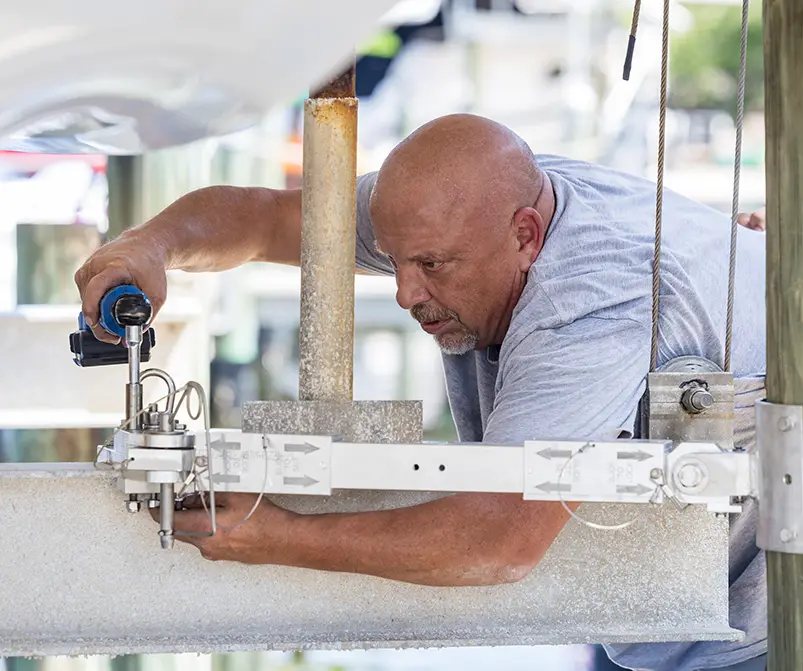
To install, we raise the lift to its highest position, attach an arm to each of the four pilings with stainless steel bolts, and level it. Each arm uses a drop pin to engage the locking clamp we fix to the I-beam.
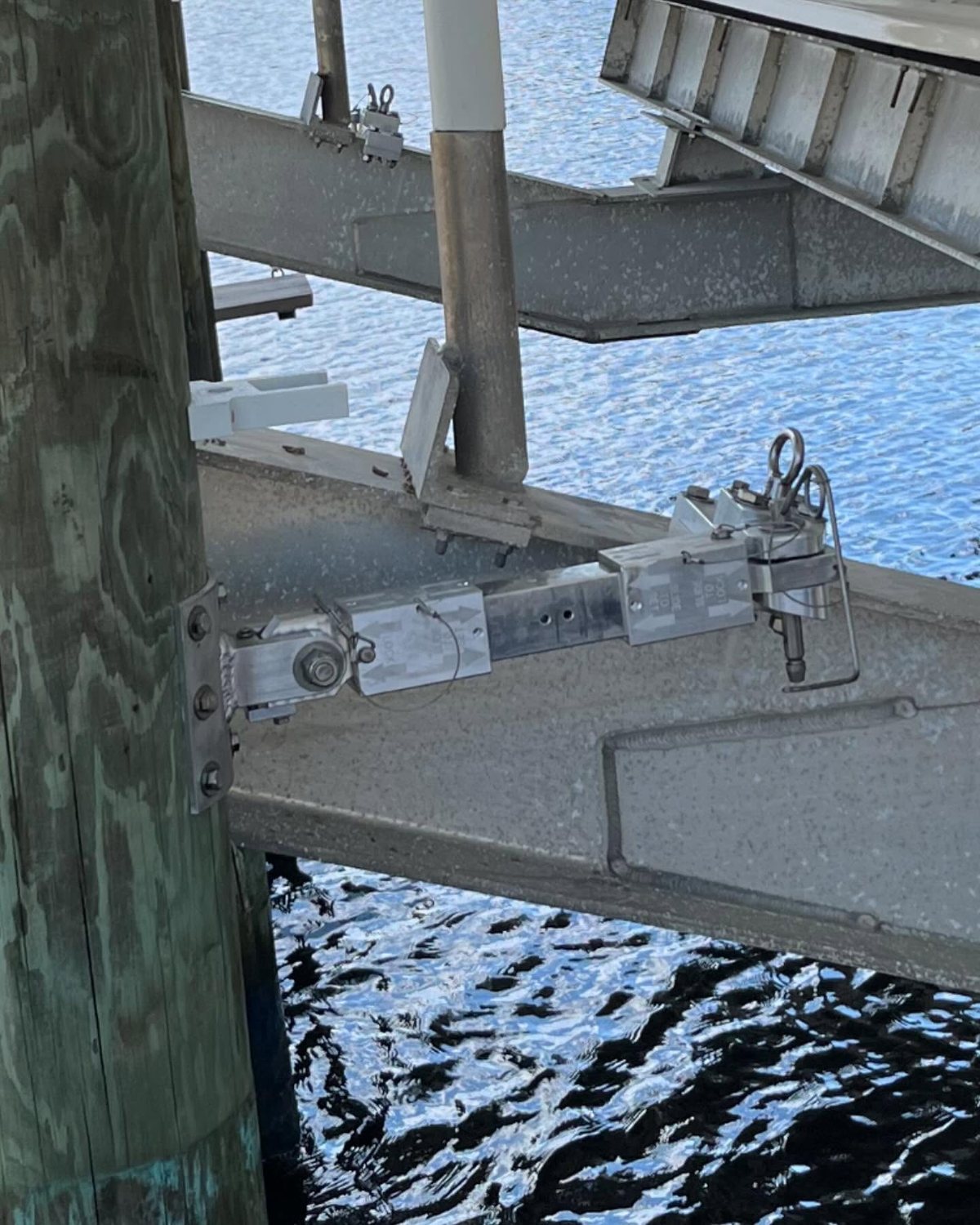
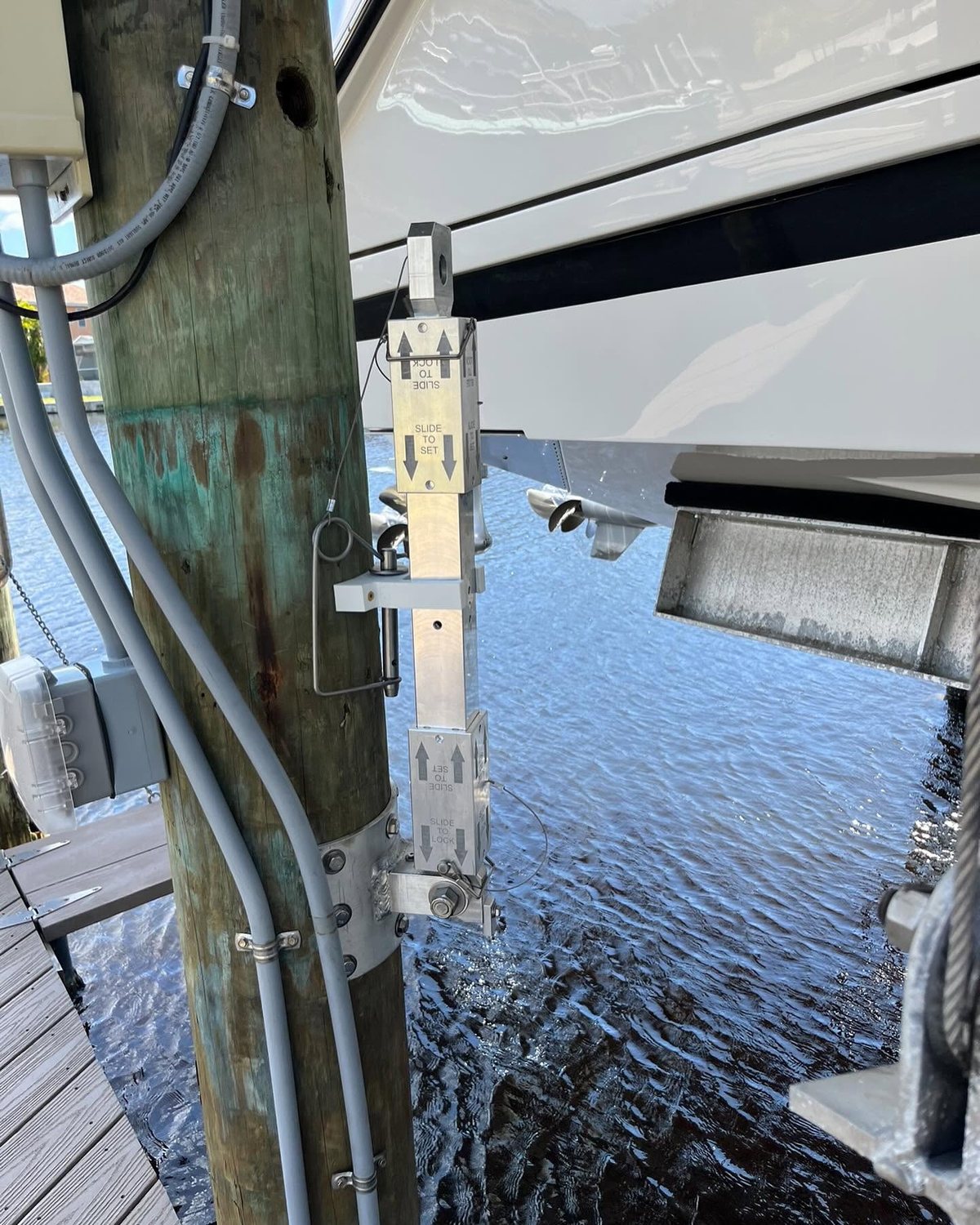
Once installed, the arms stay on the pilings in their stored position. You use your lift exactly as before until a storm is coming.
Deployment
Storm day, in three moves.
Lift to storm height
Raise the boat to the height indicator on the piling.
Pin the arms
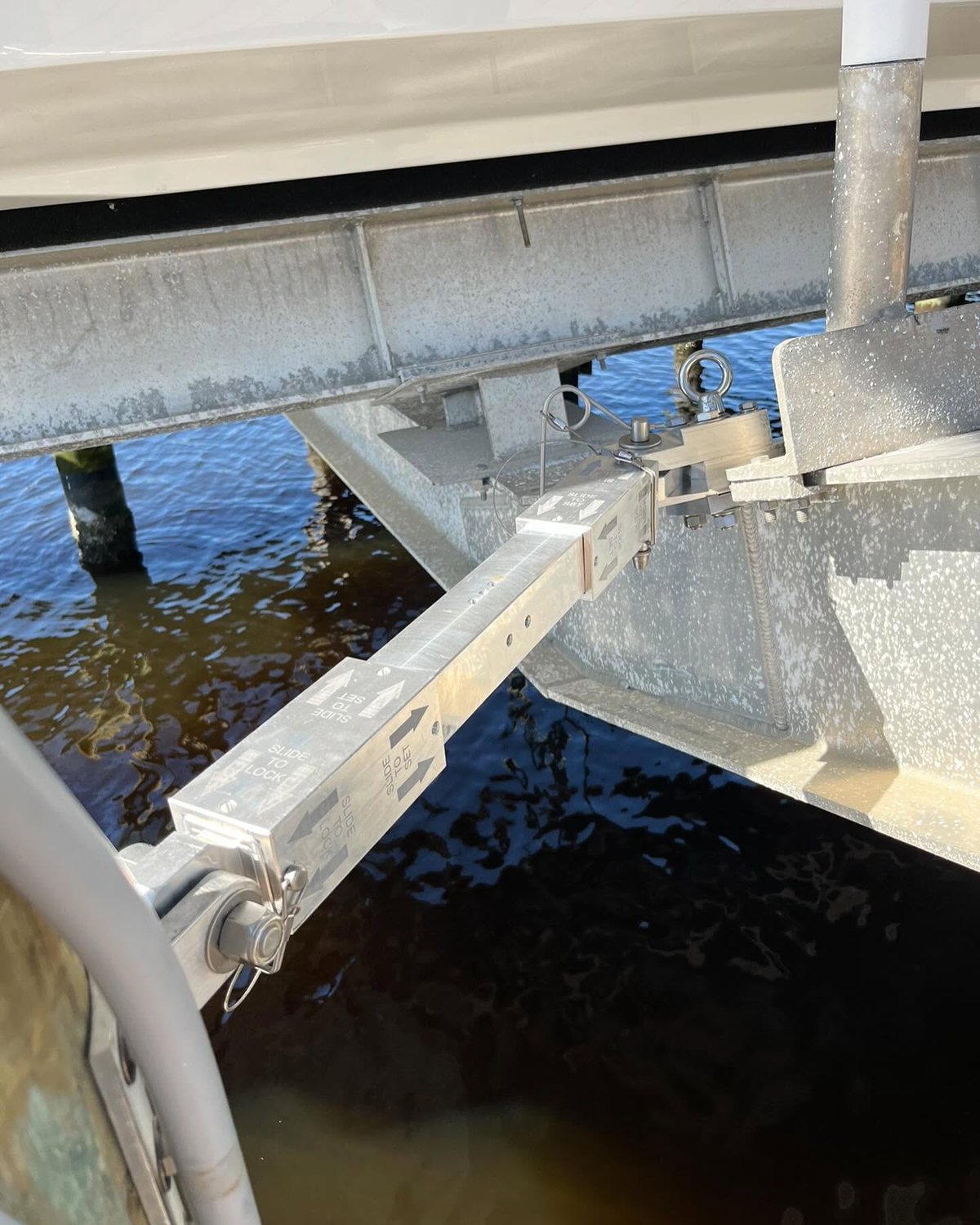
Lower each arm and pin it to its I-beam clamp with the tethered pin.
Lock the turnbuckles
Tighten the two adjustable arms and lock them in position so they can't loosen.
Built for salt water
What it's made of
Marine-grade aluminum
The same material your lift is made of, so the system should last as long as the lift does.
Stainless hardware
Stainless steel nuts, bolts and tethered pins throughout.
CNC-machined in the USA
Made by a manufacturer with forty years in aerospace and pharmaceutical work, with quality checks at every stage.
In the field
Stored and deployed
Not sure which system you need?
Piling access and lift capacity. We'll quote on the callback.